



Content Marketing for Financial Advisors: A Practical Playbook for Growth

Content marketing for financial advisors turns your expertise into a clear path for attracting the ideal clients. Instead of relying on sales-heavy messaging, this approach uses educational content to show your knowledge in a way people can understand and use. The goal is simple: create a steady, predictable stream of inbound leads by answering the questions your ideal clients already have.
Here’s a brief overview of what we’ll cover below:
- How to get a strong content foundation
- What types of content work best for advisors
- How to scale production without adding unnecessary pressure
- How to remain compliant while growing your reach
- What to measure so your efforts produce actual growth
Phase 1: Building a Calculated Content Foundation
Financial advisor content marketing works best when you have a clear foundation. This phase focuses on identifying who you serve, documenting your plan, and turning your ideas into a simple 90-day roadmap you can follow without any guesswork.
Defining Your Ideal Audience and Niche
Content stands out when it speaks to one particular group, not broad segments like “pre-retirees,” but well-defined niches such as employees of a single company, NBA players, or Silicon Valley tech founders. These groups have unique financial questions, and your content becomes far more meaningful when you focus on topics they care about most.
Your financial advisor content should also address both their technical needs and the emotional worries that sit behind their decisions. For example, if you work with founders, you’ll want to talk through planning around liquidity events and the choices they face after selling a company. If you serve employees at a specific company, your content should make it clear that you understand their stock options, retirement plan structure, and healthcare benefits in detail.
The goal is simple: answer the exact questions your ideal clients type into search engines. When you do, you create content that is precise, relevant, and built for the people you want to work with.
You can also check out our webinar on niching:
The End of the Generalist Advisor: Niching Down
Why a Documented Content Strategy is Your Most Valuable Asset
A documented strategy gives your financial content marketing structure and direction. It sets clear boundaries for topics, voice, compliance reviews, and messaging, which reduces back-and-forth and keeps your workflow steady. It also creates consistency, something both readers and search engines respond well to over time.
A written plan also outlines your long-term niche, your core themes, and how you want your content to develop. And it needs time to work, as most strong niches take 3-5 years of steady effort before they gain momentum. Sticking with your plan prevents you from switching directions too early and losing progress.
With a defined strategy, you can track progress toward measurable outcomes rather than publishing content at random. It becomes the roadmap that guides your marketing and supports predictable growth.
Creating Your Content Calendar (The 90-Day Plan)
A 90-day calendar turns your strategy into a simple execution plan. Begin by selecting a few quarterly themes based on your niche (i.e., stock compensation, business transactions, or company-specific benefits) and assign each of them a mix of content formats.
Each calendar entry should include the format (i.e., blog, video, email), the primary topic, the publication date, and the promotion channel. Most advisors keep this organized with free tools like Google Sheets or Trello. You don’t need to publish nonstop, but rather stay consistent with work you can manage.
This short planning cycle keeps your marketing grounded in actual deadlines and gives you a clear view of what’s coming next, without overwhelming your schedule.
Phase 2: High-Impact Content Types and Execution
Once your strategy and niche are locked in, the next step is choosing the types of content that create the most value for your audience. This phase focuses on practical formats, like blogs, lead magnets, videos, and newsletters, that advisors can use to share expertise in a clear and consistent way.
Thought Leadership Blogging: How to Create Content for Financial Advisors
Blogging is one of the most reliable ways to show your expertise online. Long-form posts (1,000 words or more) give you space to explain complex topics in a way your niche can understand. Search engines respond well to this depth. In fact, recent research shows that 39% of content marketers who publish longer articles (2,000+ words) report strong results from their content efforts.
When you write, implement a clear structure with simple H2 and H3 headings, and make sure to cover the questions people generally search for, including “People Also Ask” topics. This makes your content more discoverable and gives readers a path through the article.
What sets advisors apart is personal insight. Bring your niche into the story (i.e., how stock options work for your specific company group, what founders need to do before an exit, or the financial decisions physicians make early in their careers). This level of detail makes your content stand out from generic financial education online.
High-Converting Lead Magnets: Ideas for High-Net-Worth Clients
Lead magnets are gated, high-value resources that collect contact information in exchange for something useful. For financial advisors, strong options include estate planning checklists, stock-compensation guides, private-equity tax flowcharts, and worksheets for planning around significant liquidity events. These assets work well because they answer questions that high-income and high-net-worth clients already have.
To get results, pair your lead magnet with a landing page that explains the resource, shows who it’s for, and includes a short form. A clean layout and focused message tend to convert better than long explanations. In the financial services space, B2B (Business-to-Business) lead magnets convert at 8.05% via email, 4.52% via paid search, and 3.52% via organic search, with lead-to-sale conversion rates averaging 0.67%. Even a slight increase in form submissions can create steady growth over time.
The Video Advantage: Simple Ways to Create Video Content
Video builds a connection quickly because viewers get a sense of your voice, style, and personality before they ever book a call. It’s also one of the strongest formats for encouraging action. It’s been reported that 89% of people say a video has convinced them to purchase a product or service, and 68% of marketers say video outperforms Google Ads for ROI (Return on Investment).
You don’t need studio-level production to get started. Simple videos, short market updates, quick answers to common questions, or clips pulled from longer articles work well on platforms like LinkedIn. Focus on clear audio, a calm background, and natural delivery. Authenticity makes a more lasting impact than polished visuals.
Maximizing Engagement with Email Newsletter Content
Email is one of the easiest ways to stay connected to warm leads and current clients. Regular newsletters keep your audience informed and remind them that you’re thinking about the issues that are important to them.
Most advisors use two simple formats. The first is timely commentary (i.e., a short take on current market events or updates for your niche). The second is an educational roundup that highlights your recent blog posts or videos. Both formats work well when you segment your lists based on interest and tailor subject lines to what those readers want to see. Minor adjustments here typically raise open and click-through rates, which leads to more conversations over time.
Phase 3: Scaling, Systems, and Compliance
As your content library grows, you’ll need simple systems that let you create more without adding unnecessary pressure. This phase focuses on repurposing your work, bringing in support where required, staying compliant, and tracking actual results.
Content Repurposing: Making Every Asset Work Harder
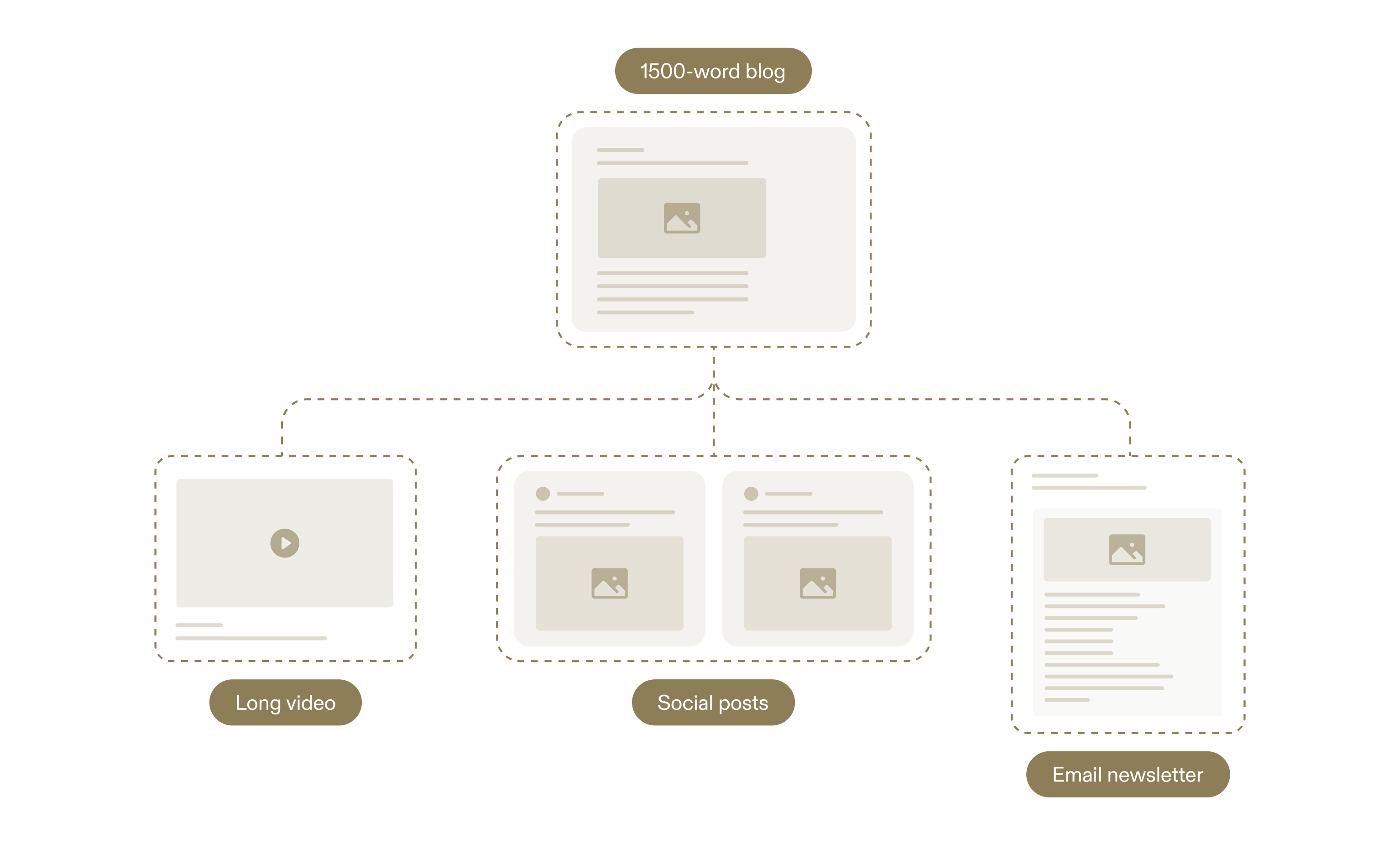
Repurposing turns one strong piece of content into several smaller assets. It increases your reach and saves time because you’re not starting from scratch every week. A typical workflow starts with one long-form blog post. From there, you can turn it into a short video script, pull out key points for five social posts, and highlight a key takeaway in an email.
This steady approach keeps your message clear across channels and extends the life of every asset. Many advisors rely on this method so that they stay consistent even during busy periods.
Scaling Content: Hiring a Content Writer for Your Financial Advisor Website
As your marketing grows, you might decide to bring in a writer who understands your niche and the language of financial planning. A good writer makes it easier to publish content on a schedule because they turn your ideas into clear, structured articles.
When vetting a writer, look for someone who knows industry terminology and understands how compliance reviews work. From there, the process is simple: you share the insight, examples, and scenarios from your work with clients, and the writer organizes everything into a format your readers can follow. This keeps your voice at the center while giving you more time to focus on clients.
The Compliance Mandate: Navigating the FINRA Content Review Process
All advisor-facing content needs a review process that follows FINRA (Financial Industry Regulatory Authority) standards. This protects your firm from misleading statements, unclear performance references, or anything that could be interpreted as a testimonial. Keeping a record of every piece you publish is also vital, particularly when you update or repurpose older content.
Frequent mistakes include language that hints at guaranteed outcomes, unclear descriptions of investment risks, or examples that imply past performance will continue. Using marketing platforms built for regulated industries can make the review and archival steps easier because everything moves through one predictable workflow.
Measuring Success: Content Marketing ROI for Financial Advisors
The strongest content programs track outcomes, not just views. Page views and impressions show that people saw your work, but they don’t tell you if the content brought in new leads. Shift your focus to conversion metrics (i.e., email sign-ups, lead magnet downloads, and booked consultations). These numbers show whether your marketing is moving potential clients closer to working with you.
You can calculate ROI by comparing the value of new clients acquired through your content to the time and money you invested in producing it. Even a steady stream of a few qualified leads each month can create meaningful growth over time.
Here’s a quick comparison table of vanity metrics and conversion metrics:
Final Takeaway: Turning Content into Clients
Content marketing for financial advisors works best when it’s focused and tied to the actual questions your niche cares about. When you build a clear strategy, create content that speaks to a specific audience, and track the actions that lead to new clients, your marketing becomes a reliable part of your growth plan rather than a task you revisit only when things are down.
Key Takeaways:
- Content has more impact when you build it around one well-defined article.
- A documented strategy creates direction and keeps your marketing consistent.
- High-impact formats, like blogs, videos, lead magnets, and emails, work well together.
- Repurposing expands your reach without adding any extra work.
- Tracking conversions, not just views, shows the true value of your content.
Next Steps:
Explore More Advisor Marketing Resources:
- How to Build a Financial Advisor Marketing Plan
- Digital Marketing for Financial Advisors: What Actually Works
- 21 Financial Advisor Marketing Ideas to Grow Your Practice in 2025
- SEO for Financial Advisors 101
See how Savvy Wealth can simplify your marketing and streamline your lead flow today!



Steven Cherucheril is the Head of Marketing at Savvy, where he leads go-to-market strategy and oversees Savvy’s internal marketing agency, helping advisors attract new clients. Prior to Savvy, Steven was part of the M&A and growth team at Thrasio, an e-commerce aggregator, and before that spent several years in management consulting at West Monroe working with technology companies.
 Contact a Savvy advisor